Help your Preschooler Learn Self-Esteem Self-Discipline Patience Self-Respect and Much More!
Children love how much fun our classes are and parents love the difference it makes in their childrens’ lives!
You will find your child more focused and more confident in both their home life and at school. Parents in our school tell us how amazed they are at the dramatic positive improvements their children have made in only a few weeks!
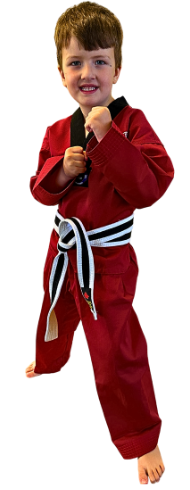
4 Weeks + Free Uniform for ONLY $49
Our Martial Arts Lessons for Preschool children in Northumberland Have Parents Raving About the Results!
In our Pre-school Martial Arts classes for 3-4 year olds and 5-6 year olds, each child learns and progresses at their own pace, learns to set individual (inspiring) goals, and then discovers their personal power while accomplishing those goals!
See for yourself why children and their parents all over Cobourg, Port Hope, and surrounding areas too!) find our pre-school martial arts lessons so inspiring!
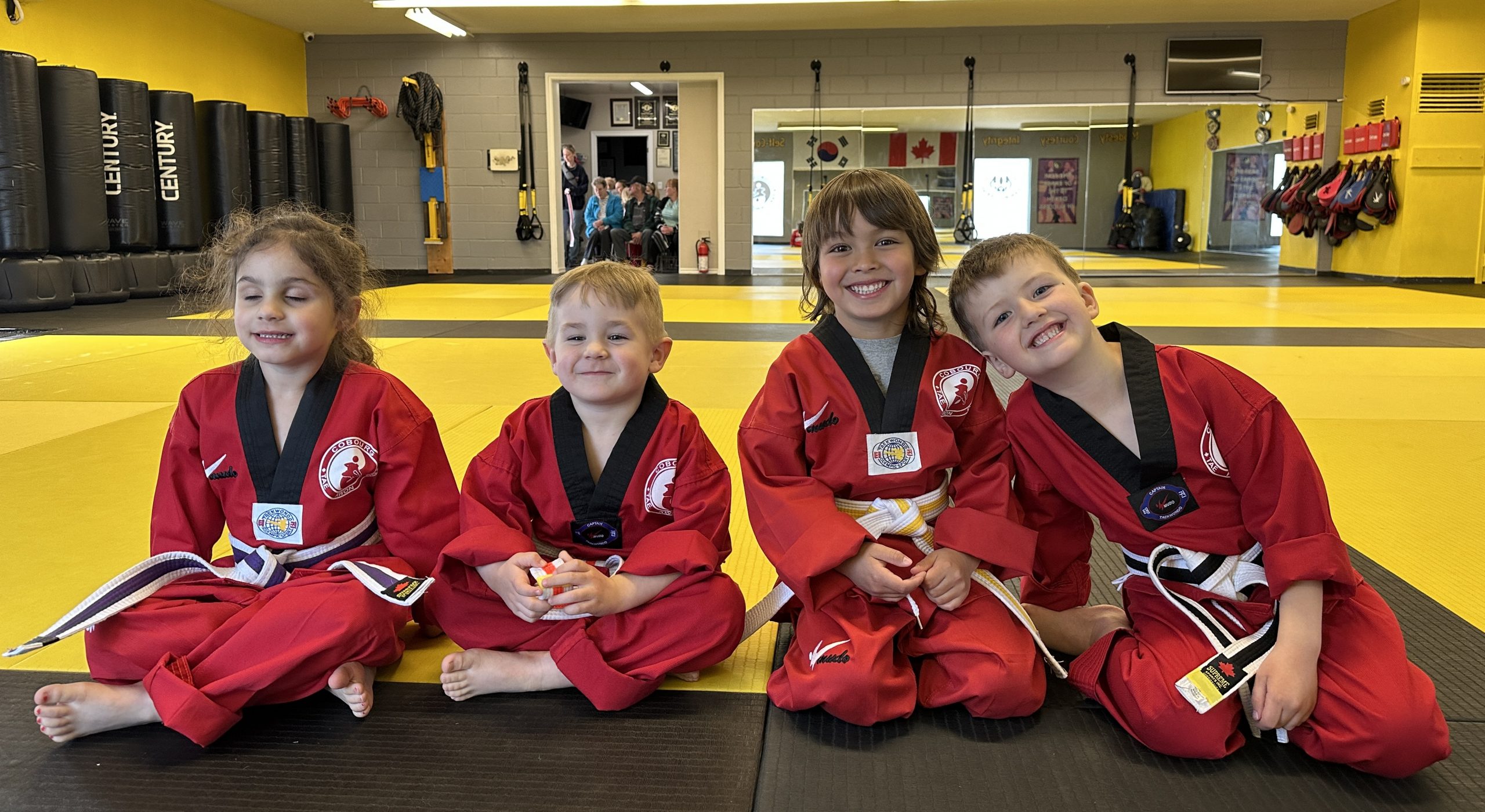
LIL’ DRAGONS
Three to four year olds love physical activity and anything involving play. They have a rich
imagination and strong desire to be less dependent on their usual caregivers. The problem we
discovered is that many children this age have a hard time with structure in a group
environment like what is commonly found in most Martial Arts schools. The solution we found
is to provide them with their own program that targets their stage of development in a manner
that keeps them entertained while at the same time building skills that set them up for success.
With that said, a structured program introducing early skill-based training in Martial Arts has
proven to be very successful.
Here’s an overview for the stages of development of children ages 3 and 4:
• Physically- they typically have low tone and poor hand-eye-coordination.
We expect them initially to drop their arms when punching and fall when kicking
or jumping. We also expect them to have no concept of spatial awareness,
therefore they will drop things that are thrown to them and bump into people
and obstacles often.
The goal for our program is to get them to punch without dropping their arms;
kick without falling; jump without falling; and catch objects thrown from various
directions and distances.
• Intellectually- they typically have a limited vocabulary therefore learning is normally
limited to visual and kinesthetic activities.
We expect them to initially lose focus when activities are over-complicated. We
also expect them to struggle with commands that have more than two
instructions. The goal for our program is to get them to follow verbal commands with no
visual demonstration. Also, our goal is for them to remember rules and
commands without being reminded.
• Emotionally- they typically have strong preferences and fears therefore they will
normally act out of bounds when their emotions get out of control. We expect them to run off the
mat when they have anxiety. We also expect
them to shut down when something either scares them or doesn’t go their way. The goal for our
program is to help them follow directions and persevere
through an activity even if they are initially emotional.
• Socially- they are typically very self-centered. Also, due to their limited vocabulary their
common form of communication is mainly physical. We expect them to mock each other, such as
falling when their classmate falls. We also expect them to crash into things when they are excited.
The goals for our program are to help them build good social skills such as spatial
awareness; not interrupting when others are talking; and taking turns properly.By understanding
the stages of development of 3 and 4-year olds, we were able to select 8 age appropriate skills that make up our Lil’ Dragons Program:
1. KICKING
2. PUNCHING
3. BLOCKING
4. CRAWLING
5. HOPPING
6. ROLLING
7. RUNNING
8. CATCHING
We cover one of the above skills per class (in order). During each class we run a warm-up;
deliver a mat chat about the skill; run two or three skill-building drills; and then we have them
demonstrate the skill to earn their skill-stripe. They must earn all 8 skill-stripes in order to
graduate to the next belt level. Once they earn their next belt they will continue to run through
all 8 skills earning their skill-stripes with more challenging curriculum as they advance to each
rank. They graduate to the Lil’ Tigers program after they have successfully completed all 9
belt ranks of the Lil’ Dragons program.
Here is an example of what a white belt must demonstrate for each of the 8 skills above in
order to earn their next belt:
1. KICKING – Front kicking in the air, alternating legs. They must be able to execute ten
kicks in a row alternating legs in order to pass.
2. PUNCHING – Straight punching in the air, alternating arms. They must be able to execute
ten punches in a row alternating arms in order to pass.
3. BLOCKING – High blocking in the air, alternating arms. They must be able to execute ten
high blocks in a row alternating arms in order to pass.
4. CRAWLING – Bear crawling across the mat. They must be able to bear crawl up and
down the floor without their knees or elbows touching the mat in order to pass.
5. HOPPING – Hopping down the floor with both feet. They must be able to hop down the
mat with both feet together, and without falling, five times in a row in order to pass.
6. ROLLING – Rolling a ball down the floor. They must be able to roll a ball down the floor
while alternating hands, and keeping at least one hand on the ball at all times, in order
to pass.
7. RUNNING – Running down the floor. They must be able to run down the floor as fast as
possible without falling in order to pass.
8. CATCHING – Catching a ball thrown underhand from one step away. They must be able
to catch a ball five times in a row in order to pass.As you can see we take Martial Arts training to
a whole new level! We use early elements of traditional Martial Arts curriculums to build skill
that are appropriate for 3 and 4-year olds.
This means that your child will learn and grow at a pace that is not too easy, nor too
challenging. The best part is the Lil’ Dragons program will equip your child with skills that they
will utilize in every area of their life!
LIL’ TIGERS
Five and six year olds are the most enthusiastic students. They love creativity and problem solving, which makes them ideal students in the Martial Arts. The problem we discovered is they are so progressive in following tasks, some teachers tend to treat them like their older peers. This is a problem because they still do not have the basic skills necessary to keep up with children ages 7 and up. The solution we found is to provide them with their own program that targets their stage of development in a manner that adapts to their social and intellectual curiosity while at the same time building skills that set them up for success. With that said a structured program introducing basic skill-based training in Martial Arts has proven to be very successful.
Here’s an overview for the stages of development of children ages 5 and 6:
• Physically- they typically do not know how to apply their muscles so they fall often when their body is in constant motion. Also, they have a basic foundation for leg, arm, core, and abdominal development, but they still lack a lot of strength. We expect them to initially struggle with multiple kicks beyond five repetitions. We also expect them to initially have sloppy technique when exercising. The goals for our program are to get them to perform high repetitions of kicks without putting their foot down, and also perform static, active, and dynamic exercises for beyond ten reps with good technique.
Intellectually- they typically have a hard time retaining beyond three commands. They also have a hard time distinguishing between their left and right. We expect them to initially get confused when we ask them to do more than three things at one time. We also initially expect them to have a hard time distinguishing between their left and right when following multiple-commands. The goal for our program is to get them to retain three or more commands at once, and beyond. We will also help them learn how to perform various left and right combinations.
Emotionally – they typically focus on things that make them happy. They also have slow brakes when they are excited. We expect them to initially lose focus and shut down when they are not happy. We also expect them to lose control when they are over-excited. The goal for our program is to help them focus even when it’s hard to do so. We will also help them control their body and their power, especially when they are excited.
Socially- they love to play with others, but are typically very competitive. We expect them to initially show weak sportsmanship when they participate in a competition.o The goals for our program are to help them build good teamwork such as no cheating; don’t get angry when they lose; and don’t brag when they win.
By understanding the stages of development of 5 and 6-year olds, we were able to select 8 age-appropriate skills that make up the Basic SKILLZ Program:
1. FOCUS
2. TEAMWORK
3. CONTROL
4. MEMORY
5. BALANCE
6. DISCIPLINE
7. FITNESS
8. COORDINATION
We cover one of the above skills per class (in order). During each class we run a warm-up; deliver a mat chat about the skill; run two or three skill-building drills; and then we have them demonstrate the skill to earn their skill-stripe. They must earn all 8 skill-stripes in order to graduate to the next belt level. Once they earn their next belt they will continue to run through all 8 skills earning their skill-stripes with more challenging curriculum as they advance to each rank. They graduate to the Kidss’ Basic program after they have successfully completed all 9- belt ranks of the Lil’ Tigers program.
Here is an example of what a white belt must demonstrate for each of the 8 skills above in order to earn their next belt:
1. FOCUS – Punching and kicking a pad that is thrown by an instructor standing one-stepaway from their side. They must be able to punch, and kick, a pad four times in a row in order to pass.
2. TEAMWORK – Holding a kicking target for their partner while their partner does ten kicks. They must be loud while counting their partner’s kicks and hold the target tightly in order to pass.
3. CONTROL – Stopping their body at attention position after running forward when an instructor says, “stop.” They must be at attention in less than three steps after the instructor says stop in order to pass.
4. MEMORY – Demonstrating the three stage 1 block’s and three stage 1 strikes from memory. They must show the proper chambers and ending position for all of the moves in order to pass.
5. BALANCE – Executing five front kicks without putting their foot down in between each rep. They must show full execution and retraction while keeping their knee chambered at belt level or higher in order to pass.
6. DICSIPLINE – Demonstrating how to properly sit, take a knee, kneel on both knees, and stand at attention without moving. They must hold each position for no less than five seconds.
7. FITNESS – Holding each static leg, arm, abdominal, and core exercise. They must not lose technique or else they have to start over. They must hold each exercise for no less than ten seconds in order to pass.
8. COORDINATION – Performing left and right punching combinations on the mitts. They must hit the mitt with proper technique and also with the proper hand five times in a row in order to pass.
As you can see we take Martial Arts training to a whole new level! We use basic elements of traditional Martial Arts curriculums to build skills that are appropriate for 5 and 6-year olds.
This means that your child will learn and grow at a pace that is not too easy, nor too challenging. The best part is the Lil’ Tigers program will equip your child with skills that they will utilize in every area of their life.usi
Empower Your Child to Avoid Becoming Another Statistic!
Equip them with the tools to succeed in the real world with Cobourg Tae Kwon Do’s Pre-school Martial Arts classes.
Our students gain the tools to function at a high level, both socially and educationally, in school. The self-confidence, self-discipline, focus skills and leadership skills they develop in our martial arts classes prepare them to be great leaders and last for a lifetime.
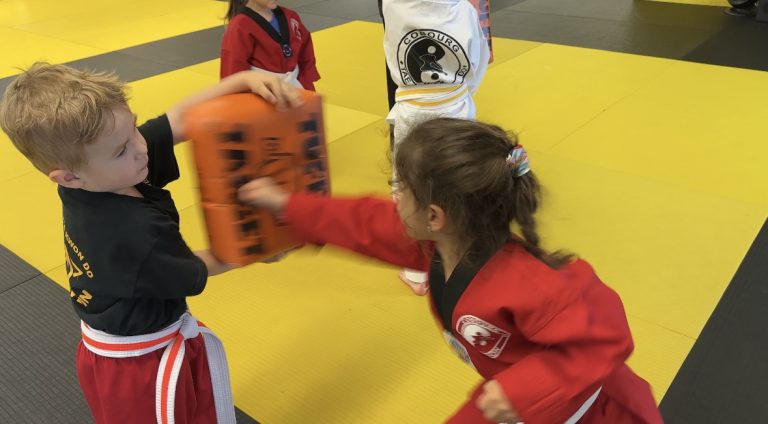
Why Choose Cobourg Tae Kwon Do?
With every challenge reached, our students grow in confidence while gaining respect for themselves and others along their martial arts journey.
The discipline and structure in our classes help children improve their concentration and as a result our students also get better grades in school.
Our self-defense lessons are fun and enable kids to learn teamwork, which allows them to build great friendships with other future leaders.
FAQ
Most frequent asked questions and answers
The great thing about our program is that the earlier you get started, the better your long-term results!
We have children in our programs that started as early as 3- or 4- years old, but since children develop at different rates, the best (and really, ONLY) way to see if your child is ready for our program is to take advantage of one of our WEB SPECIALS and try it for yourself!
No. In fact, quite the opposite!
Children are exposed to HUGE amounts of simulated and real violence on video games, television, movies, the internet and other media outlets.
But in our unique program, we teach students real, practical, effective violent conflict resolution techniques and tactics that can defuse the situation before it escalates to violence. We also teach escape techniques and tactics that even “smaller” people can use to move to safety if approached by a potentially dangerous situation.
Should your child be confronted with an aggressive situation that can’t be resolved peacefully or escaped from, he or she will also then possess the basic martial arts skills to defend themselves.
There are so many!
Martial arts students benefit from increased physical fitness and mental focus.
The focus on self-discipline, respect, self-confidence, and perseverance in the face of setbacks builds character in students young and old. Our students also join a community of people who share an interest in martial arts, improving their own way of life, and making a positive contribution in the community.
We know how busy your life is as a parent, so our program is designed so that students can make exciting progress by attending classes an average of twice a week.
Some students will want to attend more classes, and that’s great- we have options for that!
Really, the only way to know if our program is a good fit for you and your family is to try it for yourself!
We have some GREAT WEB SPECIALS, so you can try the program with no strings attached, and see for yourself how the program will benefit you or your child.
One of the best parts of our program is that every student is treated as an individual and will progress at their own rate.
Each student’s progress isn’t measured against other students, but rather against their own previous performance!
So, even students that aren’t as physically fit as the star quarterback of the football team can have a wonderful experience in our program, and become stronger, fitter, and more flexible.
Cobourg Tae Kwon Do reviews

Student
"I HAVE TOTALLY BECOME STRESS-FREE..."
“By training in the martial arts, I have totally become stress-free. I love it. My life is so much more enjoyable!”
“By training in the martial arts, I have totally become stress-free. I love it. My life is so much more enjoyable!”

Student
"I HAVE LOST 12 POUNDS, GAINED GREAT CONFIDENCE!"
“I love Martial Arts training! With the training I’ve got, I have lost 12 pounds, gained great confidence!”
“I love Martial Arts training! With the training I’ve got, I have lost 12 pounds, gained great confidence!”

Student
LOST OVER 65 POUNDS...
“Since I’ve started Martial Arts, I’ve lost over 65 pounds! On top of that, I’ve gained confidence.”
“Since I’ve started Martial Arts, I’ve lost over 65 pounds! On top of that, I’ve gained confidence.”

Student
"LOST 25 POUNDS..."
“I know that practicing the martial arts has helped me! I’ve lost 25 pounds, learned to control my emotions and be happier.”
“I know that practicing the martial arts has helped me! I’ve lost 25 pounds, learned to control my emotions and be happier.”
ARE YOU READY?
If you’re looking for the best Preschool Martial Arts Classes in the Cobourg area, you’ve come to the right place!
You’ll accomplish all of this and more in our Cobourg Tae Kwon Do kids martial arts classes!
LEARN ABOUT OUR OTHER PROGRAMS